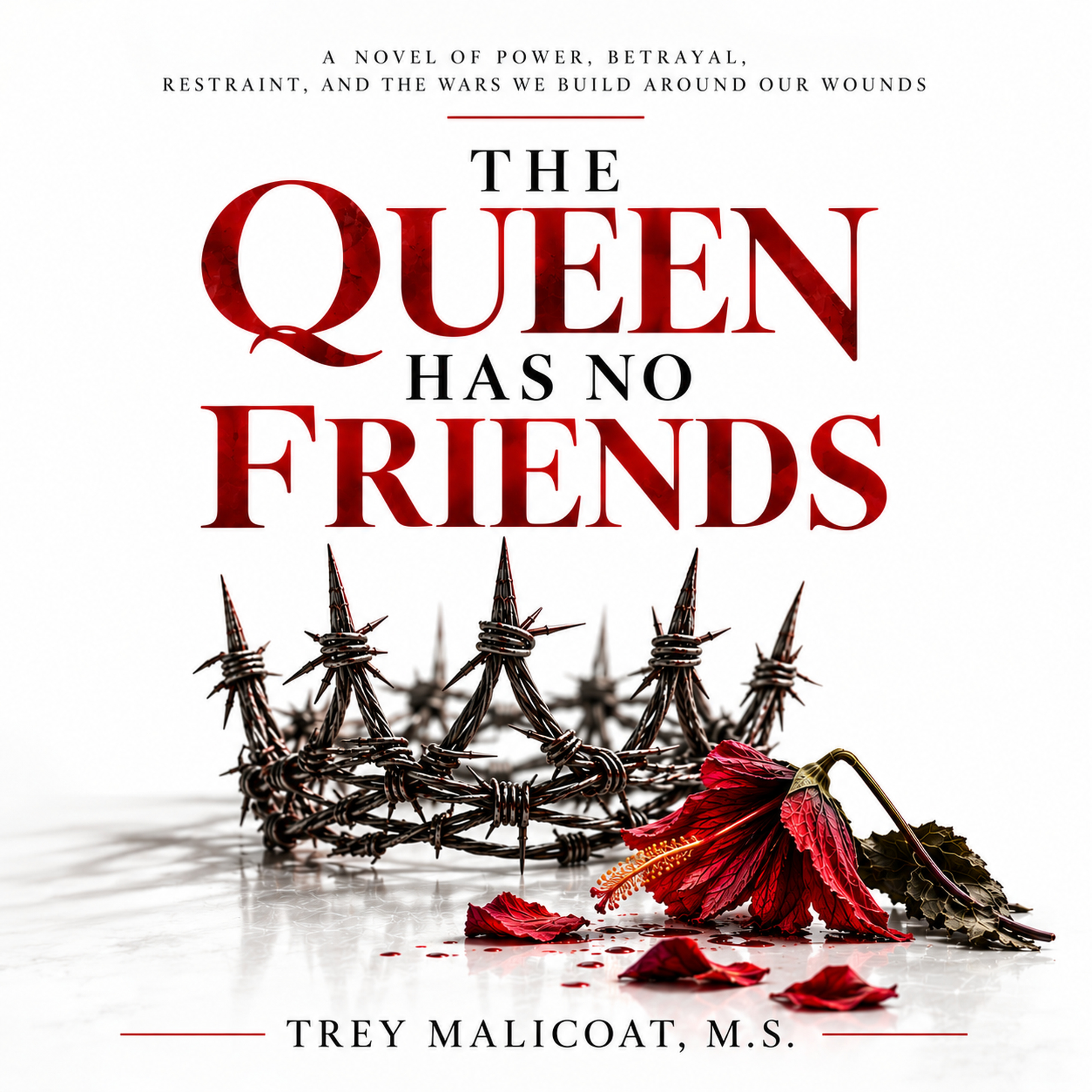
Inside the novel
What happens when trust becomes a contest for control?

He helped build the kingdom.
Then he was asked to disappear.
A seasoned strategist joins a young founder to build something larger than either could create alone. But as the company grows, the systems designed to strengthen it begin to threaten the person who needs to remain at its center.
When the partnership fractures, the damage reaches far beyond two people. Employees learn to watch the emotional weather. Family members become protectors. Loyalty begins to look like silence.
Outside the kingdom, the man who has been removed knows its strengths, its secrets, and its fragile places. He discovers how much power he could use. And how deliberately he must choose what to do with it.
The Queen Has No Friends explores the seductive line between justice and revenge, and the cost of becoming someone you no longer recognize in order to win.
“The throne does not create power. It reveals what a person is willing to sacrifice in order to remain seated.”
From The Queen Has No Friends
A cautionary tale for a business in transition
Recognize the human pattern before it becomes the business problem.
The systems meant to strengthen this company threaten the founder’s sense of control. Employees become cautious. A fractured partnership becomes a test of how power will be used. The novel makes room to examine these pressures before they shape your own decisions.
As your business introduces AI and automation, ask: Who may feel less needed? Where is authority confused with personal worth? Can people speak honestly about what is changing? What will keep human connection at the center of the new way of working?
The Cost of Standing Still carries these questions into a larger business transition: automation does the heavy lifting, while people find new purpose in connecting, creating, and collaborating.
Explore the audience journey